Early childhood is one of the most critical foundational periods in human life; it is when the vast majority of a child's intelligence is shaped, and their linguistic, cognitive, and social skills develop at an astonishing pace. In a world of accelerating digital transformation where screens dominate our children's attention, physical and interactive books remain the most powerful and safest tools to build a balanced, innovative, and critical-thinking mind.
However, the secret doesn't lie in just filling a child's bookshelf with books, but in choosing "the right book at the right time." How do we select an educational book that meets the psychological and intellectual needs of a child without falling into the trap of complexity or boredom?
In this comprehensive and deep guide, we will sail together to understand the cognitive developmental characteristics of each age group, and provide you with a practical guide to help you make smart purchasing decisions that guarantee your child's skills grow the right way.

First: Cognitive Characteristics of Age Groups & How to Meet Them with Books
A child's mind does not grow randomly; it goes through specific cognitive milestones described accurately by developmental psychologists. Choosing a book that doesn't align with your child's current cognitive stage can cause frustration and turn them off reading entirely. Here is the scientific and practical breakdown for each stage:
1. Sensory Exploration Stage (Birth to 2 Years)
At this stage, children do not yet know words or understand written symbols. They learn about the world through their hands, mouths, and eyes. Books here are not for traditional reading, but are rather "visual and sensory exploration toys."
What to choose for this age? Look for thick board books or durable cloth books that are tear-resistant and waterproof. These books should focus on strong visual contrasts (black and white for infants, bright primary colors later) and feature touch-and-feel interactive elements to stimulate sensory neural development.
2. Active Imagination & Skill Building Stage (Ages 3 to 5 Years)
This is the golden age of language development and the start of symbolic thinking and independence. Children begin to understand that pictures represent real-world objects, and their curiosity about letters and numbers ignites. They mimic actions and love the repetition that helps solidify new words in their long-term memory.
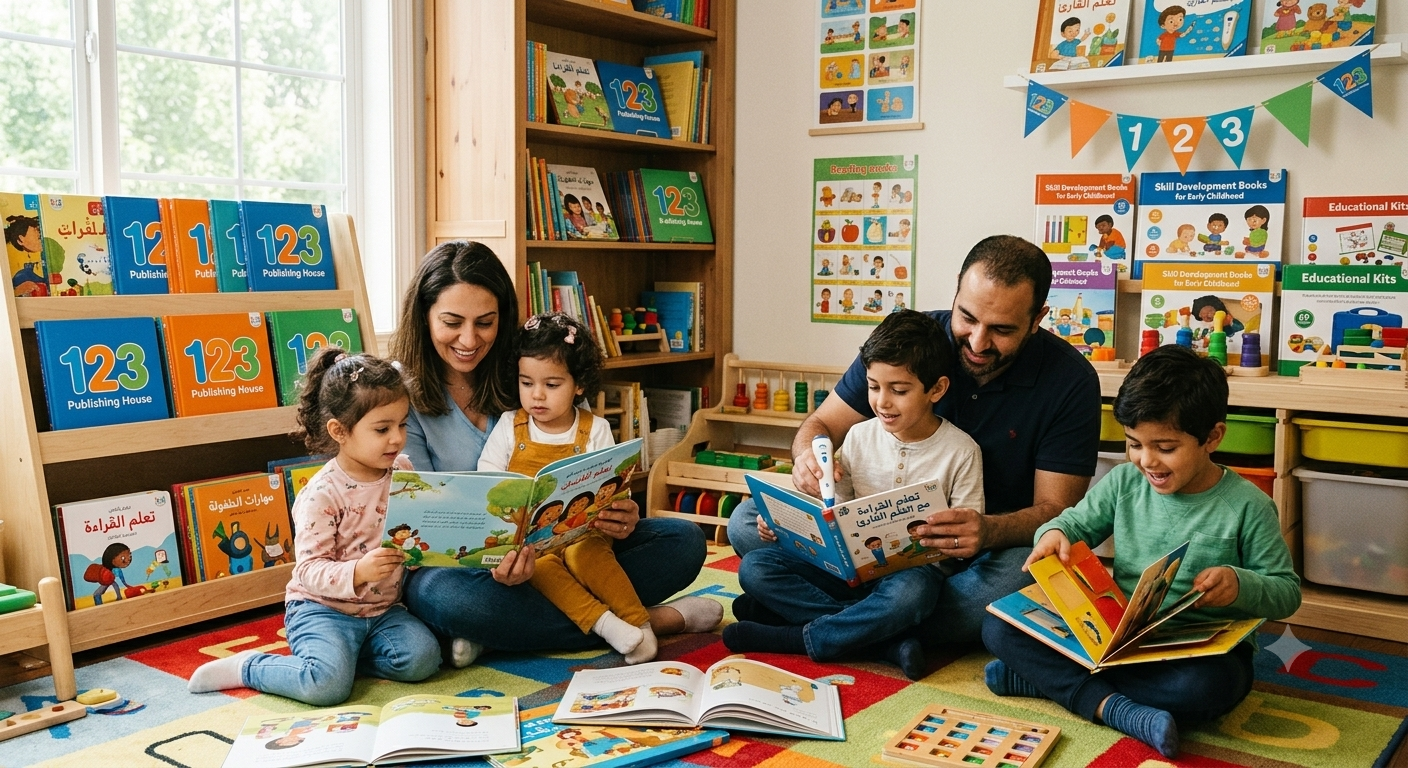
In this vital phase, it is highly recommended to rely on Early Childhood Skill Development Books. These books offer a clever integration between early academic learning and physical interactive activities (such as tracing letters, write-and-erase exercises, using stickers, and solving simple mazes). These activities not only build cognitive knowledge but also develop fine motor skills in the hands, preparing them fully for writing.
3. Decoding Symbols & Building Reading Confidence (Ages 6 to 9 Years)
At this stage, children enter primary school, where they begin learning the mechanics of independent reading, decoding written words, and linking sounds to letters. The biggest challenge here is keeping the passion alive and avoiding letting reading turn into a dry, boring academic chore.
This is where integrating modern technology with engaging interactive learning becomes key. The Smart Reading Pen is a highly innovative tool for learning to read. It allows children to hear the correct pronunciation and phonics of letters and words by simply passing the pen over the pages of books and stories. This experience gives children complete independence while studying, building their linguistic confidence in both Arabic and English without needing constant parent supervision.
Watch in Action: How the Interactive Reading Pen teaches your child languages with correct pronunciation
4. Self-Awareness & Critical Thinking Stage (Ages 10 to 12 Years)
Children's thinking at this stage shifts to deeper, more abstract levels. They begin exploring their unique identity, personal values, and specific interests in the world around them (science, nature, social relationships, and complex problem-solving).
Curated series of Books for Children up to 12 Years are the perfect choice to feed this growing intellectual curiosity. Choose graphic novels, simplified scientific encyclopedias, and character-building or emotional intelligence stories that reinforce their moral values while giving them scientific, logical answers to their diverse questions about life and the universe.

Second: The 5 Golden Rules for Evaluating Quality in Children's Educational Books
Before purchasing any book and placing it in your child's hands, make sure it passes through this evaluation filter to guarantee an exceptional, high-quality learning experience:
- 1. Merging Learning with Play (Gamified Learning): Stay completely away from books that offer dry, lecture-style teaching. Interactive books with visual challenges and puzzles trigger dopamine in a child's brain, linking reading with pure joy and lifelong learning.
- 2. High-Quality Illustrations & Visual Impact: For a child, a picture is worth a thousand words. Seek out books with clear, warm, and realistic illustrations that enhance your child's aesthetic sense and help them understand the context of the story, even before they can read the words.
- 3. Safe Manufacturing & Physical Features: Ensure the book has rounded corners rather than sharp edges to protect your little one's hands and eyes during spontaneous play, and that it is printed on premium, tear-resistant glossy paper.
- 4. Freedom from Excessive Academic Pressure: The primary purpose of educational books in early childhood is to build a "positive relationship with knowledge and a passion for self-directed learning," not to force children to memorize rules under stress.
Don't make reading a chore that ends on the last page of the book. Turn reading into an intimate, fun, and warm daily ritual; engage with the story, play with your voice to match the characters, and ask your children open-ended questions like: "If you were the hero, what would you have done?" to nurture their imagination, emotional connection, and power of expression.
Wishing you and your children an extraordinary, joyful, and productive learning journey with our publications! ✨



Leave a comment
This site is protected by hCaptcha and the hCaptcha Privacy Policy and Terms of Service apply.