
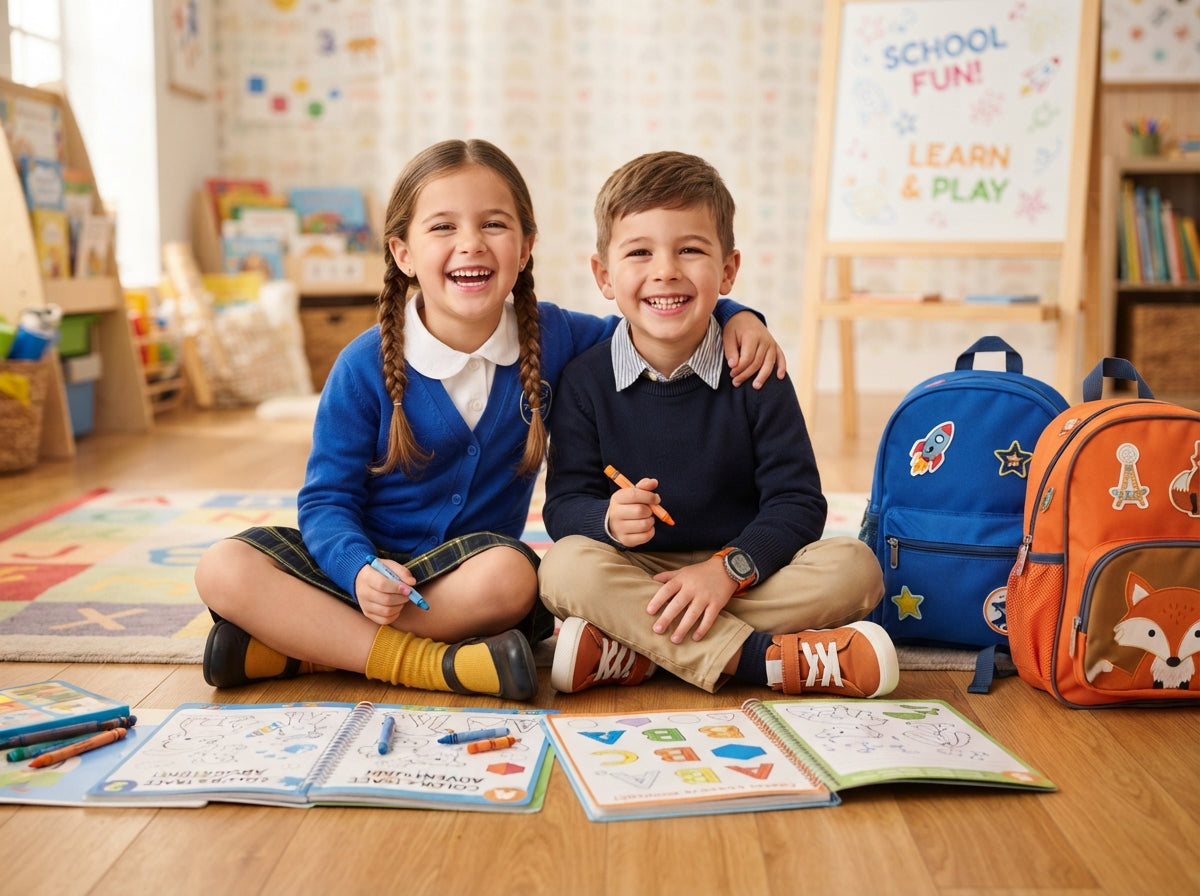
The transition from the safe, familiar environment of home to the vast world of school represents one of the greatest psychological and social shifts in a child's life[cite: 2]. A child's school readiness is not just about their ability to hold a pencil or memorize letters[cite: 2]; rather, it is an integrated system of cognitive, motor, emotional, and social skills that together form the cornerstone of their academic success and healthy psychological adaptation[cite: 2].
As parents and educators, we often ask ourselves: How do we prepare our children for this milestone without subjecting them to psychological pressure? And how do we make this foundational phase fun and stimulating for their natural curiosity?[cite: 2]
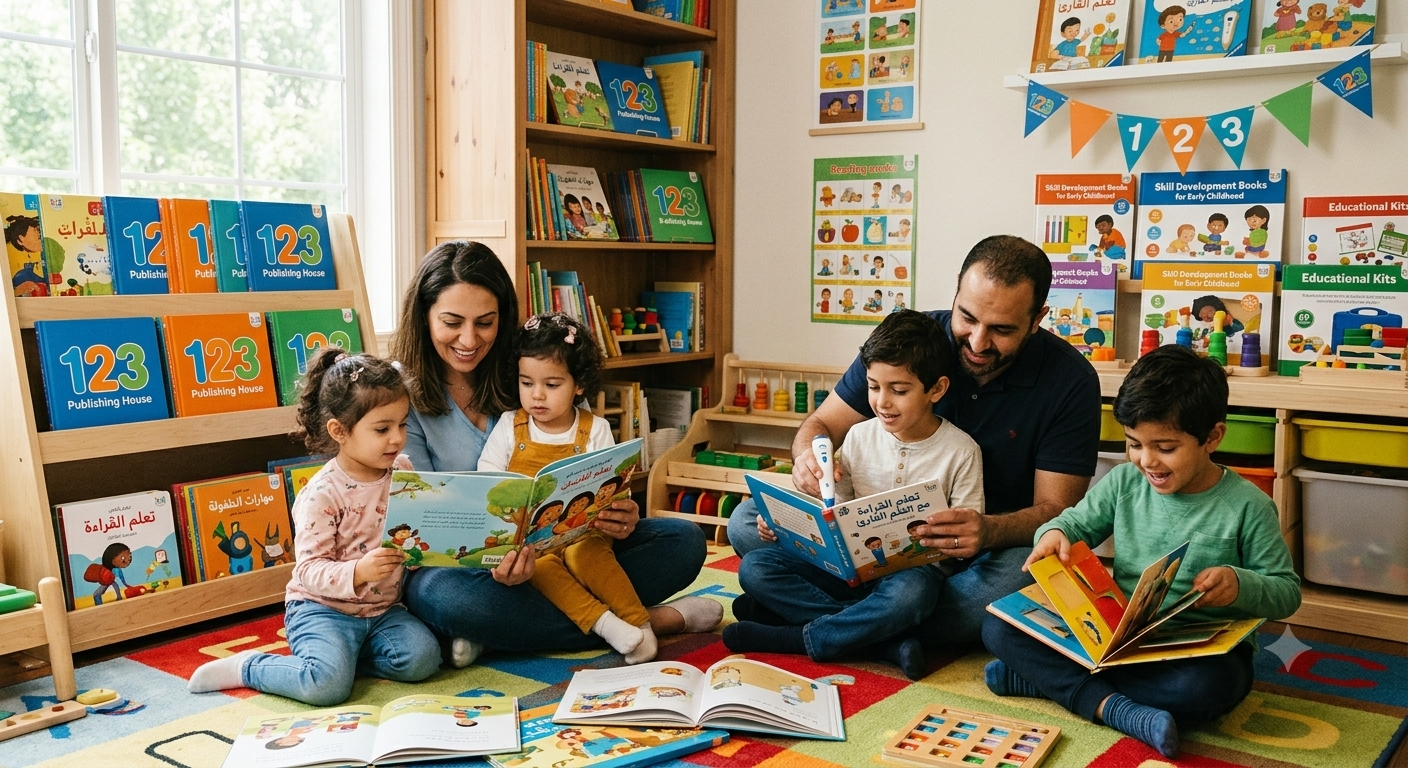
Modern educational research agrees that using innovative visual and interactive tools is the most effective way to build these skills naturally[cite: 2]. In this guide, we review 10 essential skills your child needs before starting school, and how our innovative publications support them[cite: 2].

First: 10 Vital Skills for School Readiness & How to Develop Them
1. Language Skills & Vocabulary Enrichment
The ability to express oneself, understand verbal instructions, and use complete sentences are the first keys to classroom success. Children need to recognize words, letters, and sounds in their daily environment.
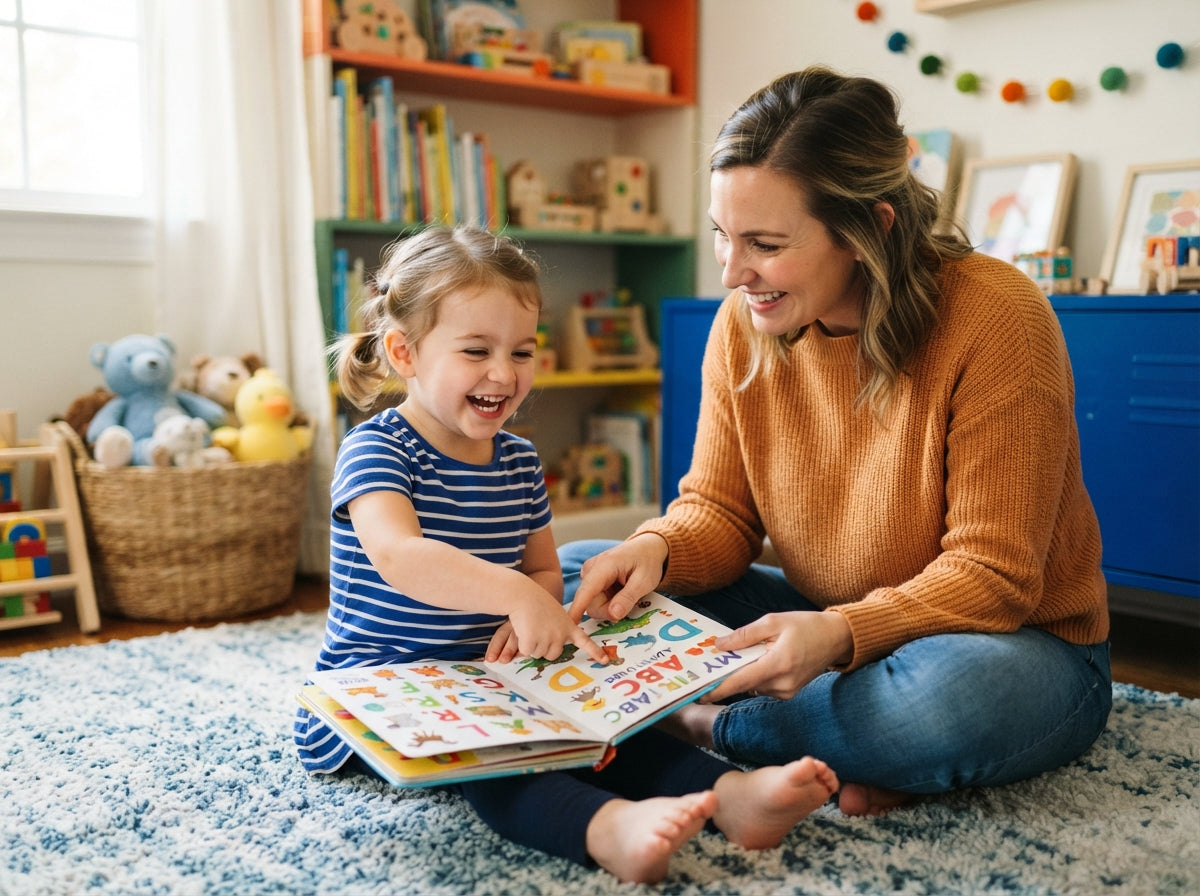
💡 The Role of Books: Illustrated stories and interactive books present words in an engaging visual context, which consolidates new vocabulary and encourages children to naturally link written symbols to phonetic sounds[cite: 2].
2. Fine Motor Skills (Hand-Eye Coordination)
Before starting to write letters and words on lines, children need to develop their fine hand muscles and coordinate their hand movements with what their eyes see. This includes holding pencils correctly, coloring within borders, and tracing lines.
💡 The Role of Books: Early Childhood Skill Development Books offer smart activities like dot tracing, line mazes, and matching, which are perfect tools to prepare small fingers for writing smoothly and confidently.
3. Visual & Auditory Discrimination of Letters and Numbers
Identifying slight differences between similar letters or distinguishing close letter sounds gives children a head start in reading and spelling, preventing early academic confusion.

4. Increasing Attention Span & Focus
With digital distractions on the rise, children's attention spans have decreased significantly. Before starting school, a child needs to practice sitting and focusing on a specific, continuous mental task for 10 to 15 minutes without getting distracted.
💡 The Role of Books: Paper activity books, such as finding differences, coloring large areas, and assembling shapes, fully capture your child's visual attention, effectively strengthening their focus muscles.
5. Problem Solving & Basic Logical Thinking
The ability to find alternative solutions and notice basic mathematical patterns (like arranging sizes from smallest to largest or realizing cause-and-effect relationships, e.g., "if it rains, we will need an umbrella") plants the seeds of creative mathematical thinking in your child's mind.
6. Social Development & Cooperative Play
Integrating with peers requires essential skills such as sharing toys, taking turns during play, and understanding others' feelings.
💡 The Role of Books: Educational stories simplify deep social concepts. By reading dedicated books about cooperation, empathy, and accepting differences, children put themselves in the characters' shoes, learning kindness and friendship naturally.
7. Emotional Intelligence & Expressing Feelings
Children face situations in school that cause anger, confusion, or sadness. A child who can verbally express what they feel, such as "I feel afraid" or "This bothers me," is less prone to tantrums and more capable of social adaptation.

8. Independence & Self-Reliance
School life requires daily self-care and organization skills, such as arranging the school bag, keeping track of tools and books, and keeping the desk tidy.
9. Listening Skills & Following Multi-Step Instructions
Inside the classroom, teachers ask children for multi-step tasks like: "Open your book, get your pencil, and start writing the date." Practicing how to comprehend and execute consecutive commands builds confidence and prevents academic confusion.
10. Passion, Curiosity & Self-Directed Learning
The most important skill of all is the child's inner drive to learn. When a child enters school seeing learning and knowledge as an exciting adventure rather than a heavy chore, they will excel and innovate throughout their academic journey.
For a joyful and highly engaging learning experience, we strongly recommend utilizing the Interactive Reading Pen as an innovative learning tool. Its voice-guided technology provides instant fun and turns your child into an independent, active partner in their own learning journey.
Second: 3 Common Mistakes Parents Make When Preparing for School
In our enthusiasm to prepare our children, we may unintentionally fall into approaches that yield counterproductive results. Avoid these mistakes to ensure a successful path:
- 1. Focusing Solely on Academic Load: Pressuring a child to memorize advanced words and math operations too early exhausts their mind and creates early resentment towards school. Remember, psychological and skill readiness is far more important than rote learning.
- 2. Comparing the Child with Others: Every child has their own unique developmental and learning pace. Comparison kills self-confidence and generates feelings of helplessness that can persist for a long time.
- 3. Lacking a Balanced Daily Routine: A sudden transition to a strict school schedule can shock a child. Start gradually by establishing reading routines and comfortable bedtime habits weeks before school begins.
To facilitate full school preparation, we recommend relying on our Comprehensive Educational Packs. They combine activity books, interactive flashcards, and educational stories in one joyful package, saving you search effort and providing your child with an unforgettable exploratory start[cite: 2].
Together, we pave the way for our children's excellence and build an interactive, bright future! 🌟


Leave a comment
This site is protected by hCaptcha and the hCaptcha Privacy Policy and Terms of Service apply.