
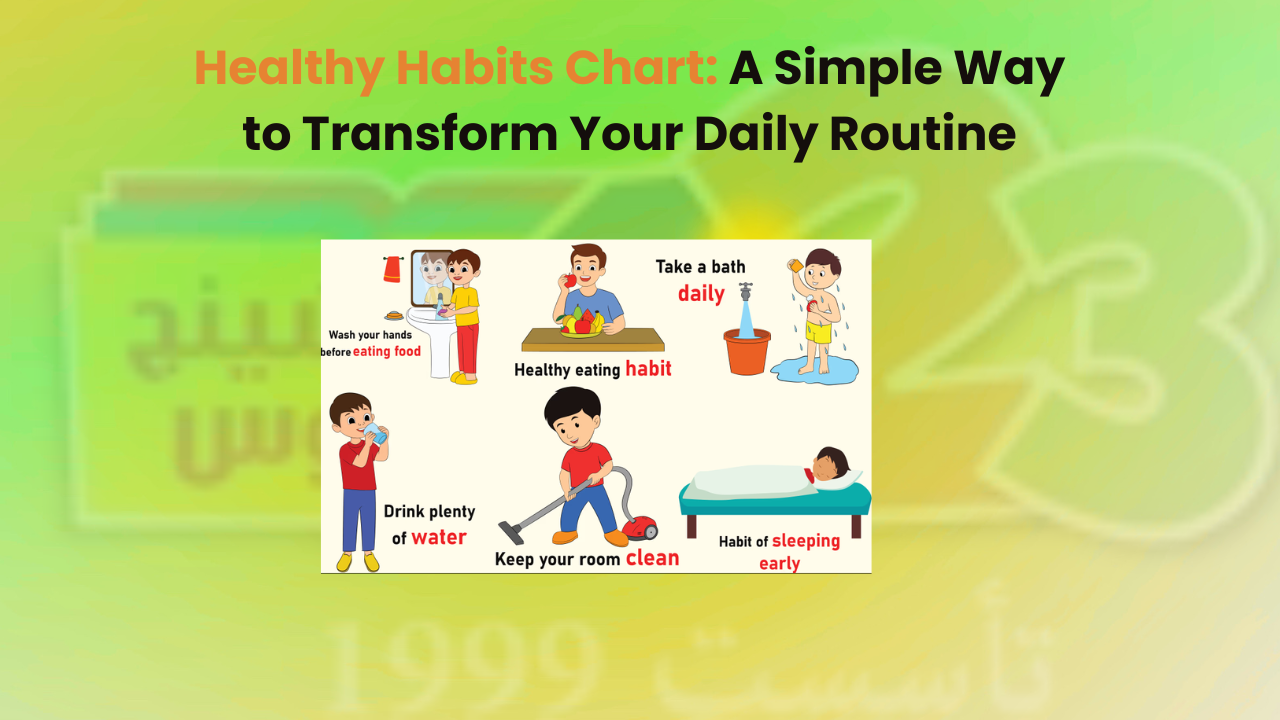
Creating a healthy habits chart can be the turning point between wishing for a healthier life and actually living one. Many people struggle with consistency. You start a new routine—exercise, eating better, drinking more water—but within days, motivation fades. The truth is, willpower alone isn’t enough. What works is visual tracking of habits, which builds accountability and helps you stay committed. Whether you are a student learning good habits, a parent teaching kids daily routines, or an adult aiming to improve your lifestyle, a chart on healthy habits is one of the most effective tools to build discipline and measure progress.
Why Choose the Healthy Habits Wall Chart?
The Healthy Habits Wall Chart helps children and students develop positive daily routines through clear visuals and simple reminders. Designed for classrooms, study areas, and homes, it encourages healthy choices that can last a lifetime.
- Promotes healthy daily habits and routines.
- Supports visual learning and habit-building.
- Suitable for schools, homeschooling, and home use.
- Bright, colorful design that keeps children engaged.
- Encourages responsibility and self-discipline.
Why a Healthy Habits Chart Works
A healthy habit chart is more than just a list. It’s a visual representation of the small actions you practice daily that build into long-term lifestyle changes. Studies in behavior psychology show that when people see progress tracked on paper or digitally, they are far more likely to stay motivated. For example, crossing off a box each day you drink 8 glasses of water gives your brain a dopamine boost, making you want to repeat the habit.
Benefits of using a chart of healthy habits
-
Encourages accountability by tracking progress
-
Makes routines visible and structured
-
Builds consistency through repetition
-
Helps identify good habits versus bad habits
-
Supports mental health and reduces decision fatigue
-
Creates motivation by showing how small tasks add up over time
A good habits chart in English can be used by anyone—students, adults, or families—to make sure routines are easy to follow and track.
Product Features
- Downloadable audio-visual version using a unique QR code.
- Easy to read from a distance.
- Write-on/wipe-off friendly surface.
- Laminated for extra durability.
- Perfect for classrooms, bedrooms, and study areas.
Types of Healthy Habits Charts
Depending on your goals and lifestyle, you can use different versions of a chart on healthy habits.
Daily habit tracker
Tracks habits you want to practice every single day, such as:
-
Drinking 8 glasses of water
-
Brushing and flossing teeth
-
Eating fruits and vegetables
-
Practicing gratitude
-
Taking 10,000 steps
Weekly habit tracker
Ideal for habits that don’t need daily repetition but are important, such as:
-
Exercising three times a week
-
Calling family or friends
-
Meal prepping for the week
-
Limiting social media use
Monthly habit tracker
Great for long-term habits like:
-
Completing a 30-day fitness challenge
-
Reading 2 books a month
-
Tracking weight progress
-
Practicing mindfulness or meditation
Printable and digital charts
Some people prefer printable habit trackers they can stick on a wall, fridge, or student desk, while others use apps and digital trackers that send reminders. Both are effective, but printable trackers are often easier for kids and visual learners.
Good Habits Chart in English for Kids and Students
Children learn through repetition and visuals. A good habits chart in English for students can teach them responsibility and structure early in life. Schools often use a healthy habits chart for class 1 to encourage hygiene, daily reading, or classroom manners.
Examples of good habits for kids include:
-
Washing hands before meals
-
Sleeping on time
-
Completing homework daily
-
Respecting parents and teachers
-
Sharing and caring with friends
Teachers also create good manners charts for students in English, which focus on kindness, discipline, and cooperation. Parents can download a good habits chart PDF free in English and place it in their child’s room to encourage independence.
Healthy Habits Chart for Adults

Adults often find it harder to maintain routines due to busy schedules, work stress, and family responsibilities. A healthy habits chart for adults can help balance physical health, mental health, and work-life commitments.
Examples of adult-focused habits to include in a chart:
-
Drinking enough water throughout the day
-
Taking short breaks at work to reduce stress
-
Exercising at least 30 minutes daily
-
Avoiding junk food and planning balanced meals
-
Limiting caffeine or alcohol
-
Prioritizing sleep hygiene
-
Practicing deep breathing or meditation
This simple tool can prevent burnout, improve focus at work, and reduce long-term risks like obesity and heart disease.
Creating Your Own Healthy Habits Chart
Designing a chart doesn’t have to be complicated. You can make one using a notebook, Excel sheet, or printable template. The important part is to make it clear, simple, and motivating.
Steps to build a personal chart of healthy habits:
-
List your habits – Choose 5–10 positive habits you want to focus on.
-
Set a timeframe – Daily, weekly, or monthly.
-
Add checkboxes or spaces – To mark completion each day.
-
Place it visibly – On your desk, fridge, or as wallpaper on your phone.
-
Review progress – Weekly reviews keep you on track.
For example, if your goal is better nutrition, your chart may include eating 5 servings of fruits and vegetables, limiting sugar, and drinking more water.
The Science Behind Tracking Habits
Habit trackers work because they give a visual representation of success. The human brain loves closure; when you tick off a task, your brain releases dopamine, reinforcing the positive behavior. Over time, small actions become automatic routines.
A 30-day habit tracker is particularly effective because it takes about 21–30 days to form a new habit. If you use a monthly habit tracker for goals like exercising daily or reducing screen time, chances of long-term success increase significantly.
Real-World Examples of Healthy Habits Charts
-
A student uses a healthy habits chart for students in English to ensure daily reading, exercise, and homework completion. Within a month, their academic performance improves.
-
A busy professional prints a monthly habit tracker to monitor water intake, exercise, and meditation. After 60 days, they report better focus and reduced stress.
-
A family creates a chart of healthy habits for kids, including oral health, hygiene, and kindness tasks. Over time, children naturally follow these habits without reminders.
Good Habits vs Bad Habits
When building your chart, it’s important to distinguish between good habits and bad habits.

-
Good habits: Eating healthy foods, staying active, practicing gratitude, and following sleep routines.
-
Bad habits: Skipping meals, excessive screen time, staying up late, overeating junk food.
A good habits and bad habits chart in English can be a useful educational tool for students, teaching them how choices affect health and life.
Comparison: Healthy Habits Chart vs Habit Journal
|
Feature |
Healthy Habits Chart |
Habit Journal |
|
Visual tracking |
Yes |
Limited |
|
Quick to update |
Yes |
Takes more time |
|
Suitable for kids |
Yes |
Not always |
|
Deep reflection |
No |
Yes |
|
Best for |
Quick daily motivation |
Long-term mindset shifts |
Both tools are effective, but if you want a simple, motivating way to track progress, charts are often better for beginners.
Who Can Benefit from This Healthy Habits Chart?
- Teachers – Reinforce healthy routines in the classroom.
- Parents – Encourage positive habits at home.
- Students – Track daily habits and personal goals.
- Homeschoolers – Support structured learning and routines.
- Child Care Centers – Promote healthy behavior in a fun visual way.
FAQs about Healthy Habits Chart
What are 10 healthy habits?
Ten healthy habits include drinking water, exercising daily, eating balanced meals, practicing gratitude, sleeping on time, avoiding smoking, maintaining oral health, managing stress, limiting screen time, and regular medical check-ups.
What is the 7-day healthy habits challenge?
It’s a short challenge where you follow daily habits like drinking more water, exercising, eating whole foods, reducing sugar, sleeping well, journaling, and practicing mindfulness for 7 days straight.
What are the 10 healthy habits for kids?
For kids, these include brushing teeth, washing hands, eating fruits, doing homework, sharing with friends, being polite, staying active, drinking milk, limiting screen time, and going to bed early.
What are Grade 3 healthy habits?
Grade 3 students are usually encouraged to practice hygiene, complete schoolwork on time, eat healthy snacks, respect teachers, keep their environment clean, and engage in physical activity.
Build Positive Habits Every Day
The Healthy Habits Wall Chart is a simple yet effective tool for encouraging healthy routines, responsibility, and self-discipline. Whether used at home or in the classroom, it provides children with daily visual reminders that help turn good choices into lifelong habits.
Order your Healthy Habits Wall Chart today and make learning healthy routines fun, engaging, and easy to remember.


Leave a comment
This site is protected by hCaptcha and the hCaptcha Privacy Policy and Terms of Service apply.