When it comes to teaching our children religion, there is no doubt that the Quran should be at the top of our list. Teaching the Quran to children at an early age is not just an educational endeavor, but a pivotal aspect of their spiritual and moral upbringing. But why is it important for us as parents to teach our young children the Quran? And why not simply let them learn it when they grow up? And how can we ensure that they understand its teachings and apply them in their lives?
In this article, we will answer these questions as we discover more about the importance of the Quran, not only for spiritual and faith development but also for raising our children with good values and morals.
The Importance of Teaching the Quran to Children
1. Instilling Values and Morals
The Holy Quran provides a roadmap for living a good life, and it is the most important resource for raising children with good morals. The Holy Quran is a source of guidance and wisdom that can greatly help in shaping children's personalities. By teaching the Quran to children, parents can instill values and morals in their children at an early age, which will serve as the foundation for their beliefs and actions throughout their lives.
The Holy Quran emphasizes many fundamental values such as the importance of treating others with kindness and respect, doing good, and being truthful in speech, among others. Thus, the Quran will encourage children to be mindful of their words and actions and to treat others well.
The Quran also plays a vital role in character building through the stories of prophets and righteous people, offering children role models to emulate. Learning these stories instills important virtues such as honesty, patience, and gratitude to Allah for His blessings, which are essential for shaping a child's personality. By internalizing these lessons, children learn how to navigate life with a strong moral foundation.
Thus, by teaching the Quran to children, you will ensure that you provide them with a strong moral compass to guide them as they overcome the ethical challenges they will face in life.
2. Strengthening Faith
There is no doubt that understanding and reflecting on the Holy Quran is indispensable for strengthening children's faith by providing a solid foundation for their beliefs. Through its fundamental teachings, the Quran instills the basic principles of Islamic doctrine, such as the oneness of Allah, belief in prophets, books, and the Last Day. These teachings help children understand the fundamental principles of Islam and build a strong foundation for their faith journey throughout their lives.
In addition, spiritual development is another important aspect of a child that is influenced by the Holy Quran. Reading, reciting, and contemplating the meanings of Quranic verses strengthen the connection with Allah, forming an important basis for children's spiritual growth. This spiritual connection, in turn, nurtures the relationship with Allah.
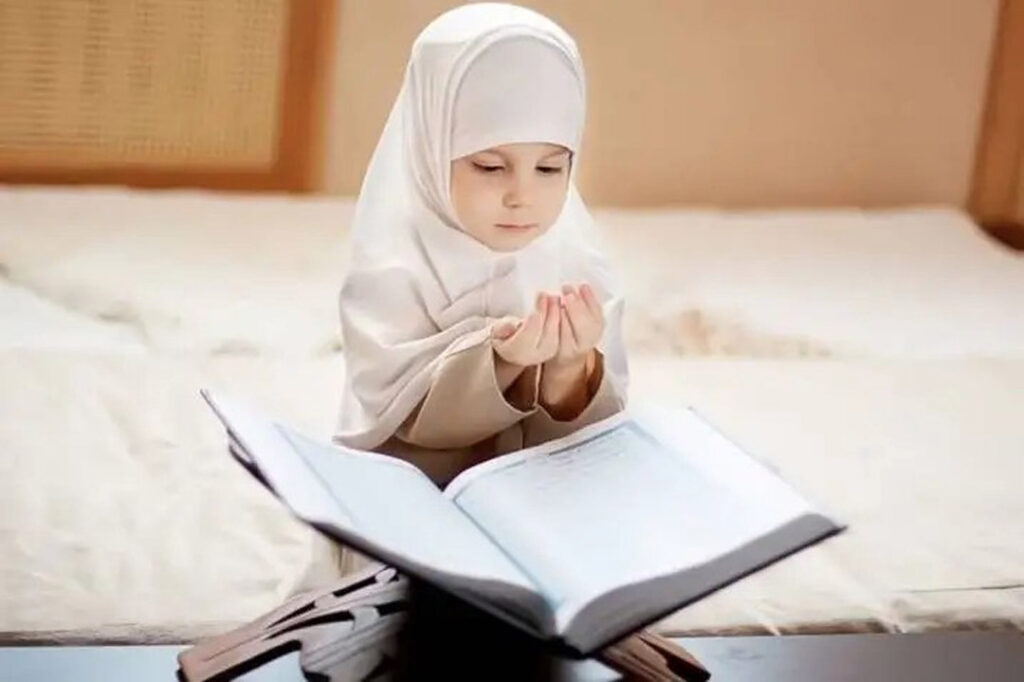
To strengthen your child's faith through the Quran, you must ensure that your child adheres to daily recitation, participates in memorization programs, and understands the meanings and interpretations of the verses. By making the Holy Quran a daily routine in your child's life, you will ensure that they acquire a strong spiritual and faith power that will guide them throughout their lives.
3. Strengthening Memorization and Comprehension
Memorizing the Quran is considered the best way to greatly enhance a child's memorization skills. By continuously memorizing Quranic verses, the brain forms more cells and neural connections to help develop memory capacity, known as neuroplasticity. Thus, this effect will extend to other aspects of the child's life, such as academic activities and so on.
In addition, memorizing the Holy Quran requires a high level of concentration and precision, which in turn contributes to the development of cognitive abilities. For example, the Quran teaches what is known as mental discipline, where children learn to accurately recall verses in the correct order. This rigorous mental exercise strengthens neural connections and improves overall cognitive functions.
In fact,
studies have shown that children who regularly engage in memorizing the Holy Quran tend to acquire a longer attention span, in addition to greater abilities to retain and recall information.
Beyond memorization, understanding the verses of the Quran is crucial for gaining deeper insights into its teachings. When children learn the meanings and interpretations of the verses they memorize, they develop a better understanding of the text. This understanding significantly broadens their horizons, making their comprehension process generally better.
4. Enhancing their Arabic language skills
By reading the Quran, children learn Classical Arabic, which is richer than the colloquial Arabic they speak in their countries. This exposure to Classical Arabic is crucial for understanding its nuances, including advanced vocabulary and complex grammar often not found in daily conversation. Consequently, reading the Holy Quran makes Arabic grammar easier to learn.
Additionally, regular recitation and study of the Quran expose children to a wide range of words and phrases, many of which are not commonly used in everyday speech. The Quran is rich with diverse and extensive vocabulary, which in turn helps children significantly expand their vocabulary.
As recitation of the Quran requires precise pronunciation, including mastering Tajweed rules. Over time, this focus on correct pronunciation and expression helps children develop clear and accurate speech patterns. Moreover, the Quran provides many examples of Classical Arabic grammar and sentence structure in their most eloquent forms. Thus, studying the Quran allows children to see these grammatical rules in context, helping them understand and apply them correctly.
5. Fostering Reflection, Contemplation, and a Love for Learning
The Quran places high value on knowledge and education, as the first verse revealed to Prophet Muhammad (peace be upon him) was "Read in the name of your Lord who created." The Quran often invites readers – both believers and non-believers – in many of its verses to reflect on the universe around them, contemplate human existence, and the signs of the creation of living beings. This, in turn, stimulates children's curiosity and encourages them to ask questions and seek answers.
Additionally, the Quran encourages intellectual engagement and critical thinking. Verses like "Will they not then ponder on the Quran?" (Surah An-Nisa) and "Say: Are those who know equal to those who do not know?" (Surah Az-Zumar) promote deep reflection and analysis. Thus, engaging with the Quran in this manner helps children develop analytical skills and a deeper understanding of the learning process.
The Quran offers many examples of prophets and righteous individuals who dedicated themselves to seeking knowledge, portraying prophets such as Abraham, Moses, and Joseph as individuals pursuing wisdom and understanding. These models inspire children to appreciate and seek knowledge, and to follow in the footsteps of these revered prophets.
Instill a love for reading early in your child with early education and kindergarten books
Tips for teaching the Quran to children
1. Share inspiring Quranic stories with them
Stories play an important role in various educational fields, including teaching the Quran. Sharing Quranic stories with your children is very important in instilling a love for them in their hearts. Teaching children the Quran through stories also carries different goals, such as sparking thought or serving as a good example for them to follow.
You can easily achieve this by using bedtime storybooks or Islamic animated videos that will enhance their understanding of the Quran.
2. Make it easy
Never force your children to spend too much time reading and memorizing the Quran, as such an attitude can completely discourage your child. What really matters is consistency and regularity in learning the Quran, even if it is at a slow pace. Just be patient and always remind yourself that a journey of a thousand miles begins with a single step!
Read also: The best strategies for effective homeschooling: a parent's guide to teaching children from home
3. Dedicate time that suits your child's abilities
One easy way to effectively teach your child the Quran is to dedicate a specific time each day for Quran recitation, Tajweed, or contemplation to bring the Quran closer to their heart and develop a more meaningful relationship with Allah (SWT). Just keep in mind that a few minutes of easy learning can be more effective than hours of forcing your child to study or memorize the Quran against their will.
Establishing a regular study routine ensures that learning becomes a habit and part of your child's daily activities. Therefore, set a specific schedule for Quran study, and try to adhere to this schedule as much as possible. This not only helps in achieving steady progress but also instills a sense of discipline and commitment in your child.
4. Repetition is the mother of learning!
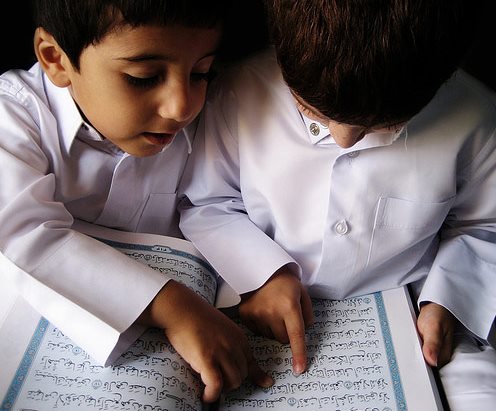
There is no doubt that repetition is one of the most effective teaching methods for children learning the Quran. Therefore, try reading short surahs in front of them repeatedly, and play the Quran at home as much as possible to make it familiar to them. Day by day, you will notice a significant difference in their level.
5. Find a teacher to teach your child the Quran
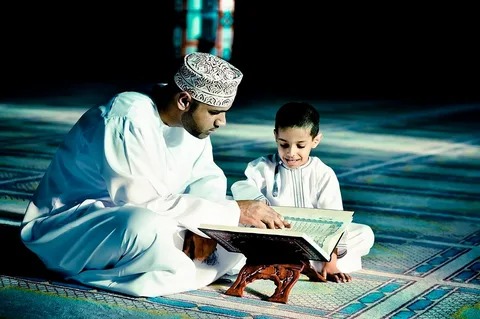
If you cannot follow up on your own, it is best to find a skilled teacher for your children who can teach them to read the Quran accurately without pronunciation errors. There are many advantages to learning with a specialized Quran teacher who knows how to teach children, as experienced teachers know how to make lessons engaging using various practical techniques suitable for children.
The Importance of Teaching Children the Holy Quran
Teaching children the Holy Quran is one of the most important means of building a sound Islamic personality. It helps instill good values and morals from an early age, and develops in the child a love for good, respect, and discipline.
When a child gets used to reading and memorizing the Holy Quran regularly, they acquire strong linguistic skills, learn formal Arabic vocabulary, and their connection to their religion and Islamic identity increases.
Benefits of teaching the Quran to children
- Promoting Islamic values and morals.
- Strengthening reading and Arabic language skills.
- Developing focus, attention, and memory.
- Instilling the love of worship and obedience from a young age.
- Boosting self-confidence through memorization and recitation.
- Helping to build a balanced and sound personality.
Benefits of memorizing the Quran for children
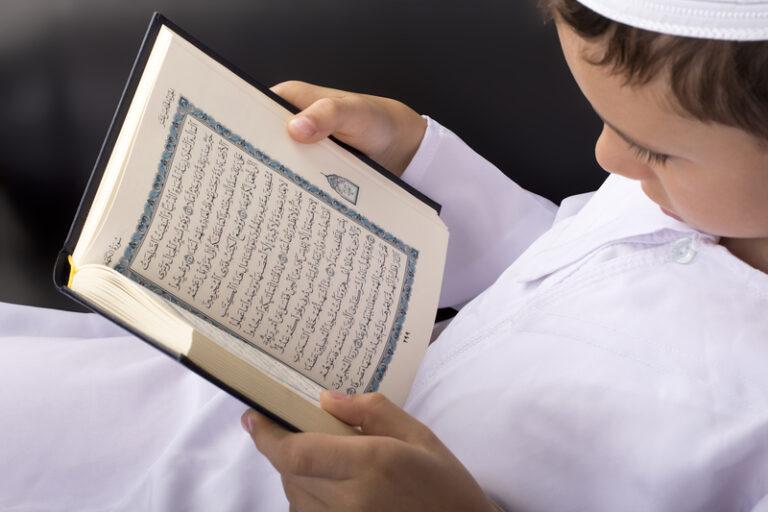
Many educational experiences indicate that memorizing the Holy Quran helps children improve memory, develop learning skills, increase the ability to focus and comprehend, in addition to acquiring positive behaviors in daily life.
Moreover, regular recitation of the Quran for children contributes to strengthening their connection with the words of Allah, and helps build positive habits that continue with them throughout different stages of their lives.
Frequently Asked Questions about teaching children the Holy Quran
What is the importance of teaching children the Holy Quran?
Teaching the Holy Quran helps children acquire Islamic values, improve Arabic language skills, and develop morals and positive behavior.
What are the benefits of memorizing the Quran for children?
Memorizing the Quran helps strengthen memory, increase concentration, and improve the ability to learn and comprehend.
When can a child start learning the Holy Quran?
A child can start learning the Holy Quran at an early age through listening, repeating, and gradually memorizing short surahs.
How can we encourage children to read the Quran?
Children can be encouraged through good example, dedicating daily time for reading, and using enjoyable and age-appropriate teaching methods.
In conclusion, there is no doubt that teaching the Quran to children is an important investment in their future due to its importance in instilling values and morals in them, strengthening their faith, and enhancing their love for learning, in addition to strengthening their Arabic language skills. Thus, the importance of teaching the Quran to children extends beyond the scope of religious education.
Therefore, parents have a responsibility to encourage children to learn and master the Quran without pressuring them to exert more than their capacity. By teaching them the Quran, we not only guide our children on their spiritual journey, but also contribute to forming individuals who possess the best values and good morals.
And always remember that learning the Quran is an ongoing journey, so taking small, continuous steps is much better than taking large, exhausting steps that ultimately lead to the complete cessation of the learning journey. Finally, do not forget to subscribe to our blog to receive all new articles first.





اترك تعليقًا
This site is protected by hCaptcha and the hCaptcha Privacy Policy and Terms of Service apply.